Published on June 1, 2022
A must-see tour of CNES
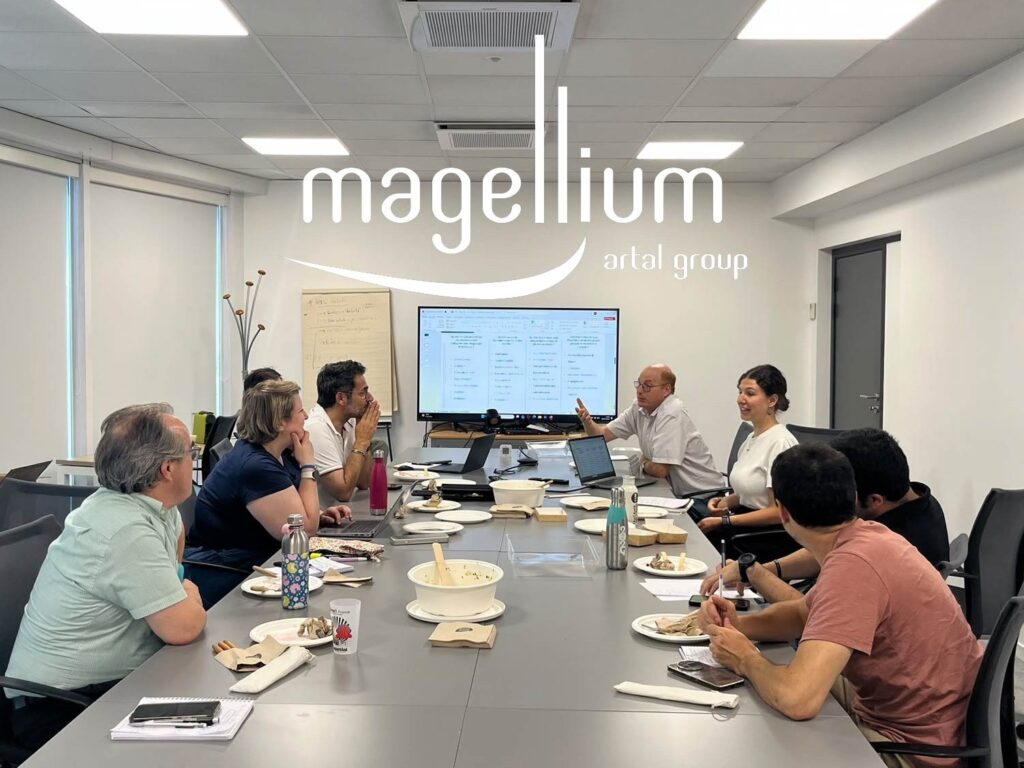
Magellium Artal Group presented its high-potential space activities. These activities span a variety of fields, including space robotics, innovative initiatives for new missions, and Earth observation. Among the projects, Joel Dorandeu, Director of the Earth Observation Unit, explained how the diverse expertise developed in the space sector is being applied to the study of climate change and hydrology. Indeed, these activities represent a key focus for the unit, in line with environmental concerns.
First, regarding climate, Magellium Artal Group explained how the unitworks closely with laboratories such as LEGOS. This collaboration enables the estimation of the Earth’s energy imbalance(as reflected in sea-level rise and ocean heat content). These components are calculated usinggeodetic space data supplemented with in-situ oceanographic data. Thus, thanks to the scientific methods developed by the laboratories and implemented in robust data processing by Magellium,accurate informationonthe current state of theEarth’sclimate systemandits evolution is made available.
Secondly, regarding continental hydrology, Magellium emphasized the need for partnerships. Indeed, these multiple partnerships are essential in a field that is inherently multidisciplinary, regardless of the targeted applications. Thanks to the expertise already present in laboratories and among industry partners, there is a unique opportunity to leverage a wealth of space-based and in-situ data. This will also facilitate the emergence of an Operational Hydrology Service dedicated to supporting these applications.
CNES, a long-standing supporter
In the history of the Magellium Artal Group, the CNES (National Center for Space Studies) plays a pivotal role. In fact, Magellium was originally founded to meet the needs of the CNES. The CNES’s trust and support have enabled Magellium to establish itself in the space industry. Furthermore, renewed cooperation on these topics would represent a major step forward in the field of Earth observation.